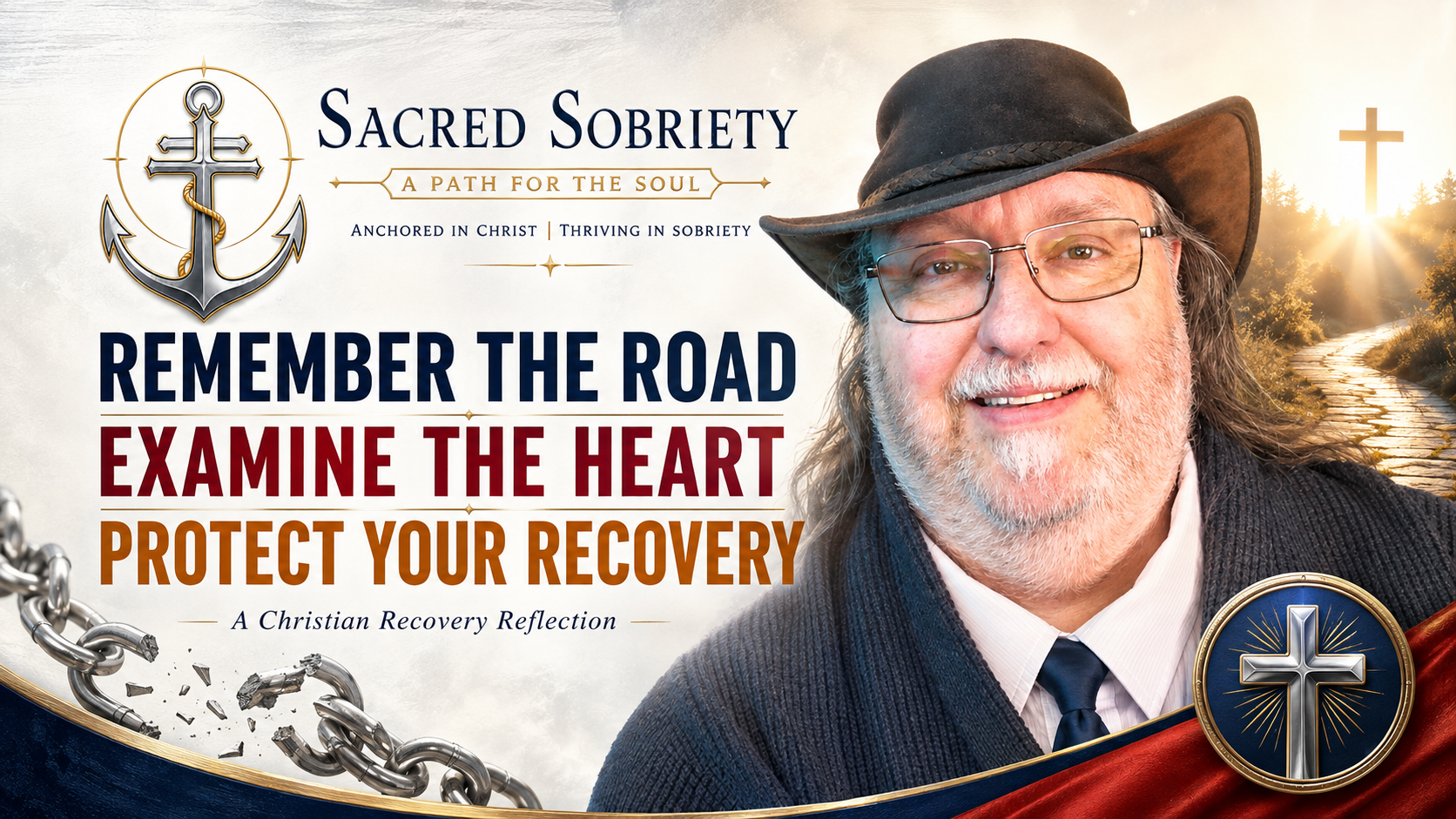
Look back without shame. Look within without condemnation. Move forward with greater spiritual resilience.
Adapted from the upcoming devotional Spiritual Resilience: A 14-Day Devotional Journey Through 2 Peter
“And thou shalt remember all the way which the Lord thy God led thee.”
—Deuteronomy 8:2
“Let us search and try our ways, and turn again to the Lord.”
—Lamentations 3:40
There is familiar advice that tells us we should never spend too much time looking into the rearview mirror. After all, we cannot safely move forward if our attention remains fixed upon everything behind us. Yet there are moments when a thoughtful glance backward becomes necessary. We need to remember where we have been, what we have survived, what we have learned, and what we never want to return to.
The danger is not found in looking back. The danger comes when we become so focused upon our past that we stop paying attention to the road ahead. Healthy remembrance does not invite us to relive our failures, return to our former bondage, or remain imprisoned beneath shame. It invites us to recognize how faithfully our Heavenly Father has carried us and then honestly examine whether we are still walking the path He has placed before us.
This is where the Ministry of Remembrance begins. We look in two important directions. First, we remember the road behind us. Second, we examine the heart within us. One gives us perspective concerning where we have been, while the other provides present-tense awareness concerning where we are today.
Together, remembrance and examination help protect our recovery, strengthen our discipleship, and deepen our spiritual resilience.
The Road Behind and the Heart Within
The Apostle Peter understood that faithful disciples sometimes need to be reminded of truths they already know. He did not assume that spiritual maturity made remembrance unnecessary. Instead, he recognized that repetition, reflection, and spiritual awareness help believers remain established in the truth.
The same principle applies to recovery. We may understand the dangers of addiction, destructive behavior, emotional isolation, and spiritual complacency. We may have years or even decades of sobriety behind us. Nevertheless, knowing something intellectually does not always mean that we are presently living in harmony with what we know.
Remembering the road behind us allows us to see the past honestly. We remember the confusion, damaged relationships, broken promises, secrecy, exhaustion, and spiritual emptiness that once characterized our lives. At the same time, we remember the grace of Jesus Christ, the people God placed along our path, the doors that opened, and the strength that appeared when we believed we had nothing remaining.
Examining the heart within brings those lessons into the present moment. It asks whether the spiritual disciplines, healthy boundaries, trustworthy relationships, and recovery practices that helped establish us remain active. It also asks whether confidence has gradually become complacency or whether old emotional and spiritual patterns are quietly returning.
Remembrance asks, “Where was I, and how did God meet me there?” Examination asks, “Where am I today, and what is presently happening within me?”
We need both questions.
Learning to Look Back Differently
For many years, whenever I reflected upon my past, remembrance usually expressed itself through the language of regret. I would think about what I should have done, what I could have done differently, and how I might have avoided certain consequences if I had only made better decisions.
Looking back was not always an opportunity to gain wisdom. More often, it became an exercise in shame, condemnation, judgment, and the exhausting belief that I should have somehow known better. Instead of recognizing growth, grace, and transformation, I saw only failure and missed opportunities.
Today, I am learning to look back differently. I can see how far I have come in my spiritual growth and recovery while still acknowledging the moments when I stumbled, fell, or returned temporarily to what felt familiar. I no longer have to deny the consequences of my choices, but neither do I have to interpret every painful memory as evidence that I remain condemned.
When I remember the road today, I also see the hand of God. I recognize the miracle of His grace and the tender mercies that were present even when I did not understand or acknowledge them. The wilderness remains part of my story, but it is no longer the entire story.
Recognizing Grace in the Wilderness
One of the most significant moments in my recovery journey occurred shortly after Christmas as the new year of 2005 began. I found myself standing on the sidewalk outside Harborview Medical Center in Seattle, Washington. It was cold and early in the morning. I had a backpack, my work boots, a couple of days’ worth of clothing, and three cartons of cigarettes.
At the time, I did not necessarily recognize the experience as my rock bottom. I had already endured addiction, instability, rejection, loss, and many difficult consequences. Yet I continued believing that I could somehow survive through my own resourcefulness, stubbornness, and ability to press forward.
My wilderness was not a barren desert filled with sand, heat, and an obvious lack of provisions. My wilderness was the city streets of downtown Seattle. There was nowhere I could safely rest, no place where I could settle, and no clear understanding of what would happen next.
Even then, I did not immediately turn toward God. I returned to what I knew best. I relied upon survival instincts and searched for whatever work I could find. I located a day-labor hall and accepted physically demanding jobs while operating on very little rest and almost no stability.
I walked throughout the night, found food whenever I had enough money, and continued forcing my body forward. I dug ditches and performed other forms of manual labor while becoming increasingly exhausted. Physically, spiritually, emotionally, relationally, and financially, I was approaching emptiness.
Eventually, an opportunity opened through a transitional housing program. Within a few days, I had a place where I could rest and begin processing everything that had happened. At the time, I wanted to forget the entire experience, leave it behind, and regain some measure of confidence and control.
Years later, however, I began seeing what I had been unable to recognize while living through it.
I once believed I had survived through white-knuckling, grinning and bearing it, and relying entirely upon myself. Looking back now, I recognize moments when God was working within the quiet and sacred spaces of loneliness, exhaustion, and emptiness. Strength appeared when I should have had very little remaining. Opportunities emerged when I needed them. A path into transitional housing opened when I could not see how my circumstances would change.
I may not have consciously acknowledged God’s presence during that season, but He had not abandoned me. My Heavenly Father was responding to needs I did not yet know how to place before Him. He was quietly carrying me through a wilderness that I could not have endured through my strength alone.
Remember the Wilderness—and the Manna
Sometimes we do not recognize the grace of God while we are moving through the wilderness. We may be too exhausted, frightened, confused, discouraged, or focused upon survival to understand how He is sustaining us. Months or even years may pass before we look into the rearview mirror and recognize the markers of grace He placed along the road.
We remember the wilderness, but we also remember the manna. We remember the bondage, but we also remember the deliverance. We remember the moments of desperation and the consequences that awakened us, but we also remember the people God placed within our lives, the prayers that were answered, and the doors that opened when hope appeared to be lost.
This is the first direction of the Ministry of Remembrance. We look backward so that we may understand the road honestly. We remember our pain without allowing it to condemn us, acknowledge our choices without minimizing their consequences, and recognize our powerlessness without forgetting the strength and provision of God.
The rearview mirror allows us to see both the wilderness through which we traveled and the One who faithfully carried us through it.
R — Remember Where You Were
Remembering where we were does not mean glorifying our past or becoming consumed by shame, guilt, and regret. Instead, it represents an honest acknowledgment of the road we have traveled and the grace that met us along the way.
Moses told the children of Israel, “And thou shalt remember all the way which the Lord thy God led thee” (Deuteronomy 8:2). They were not merely commanded to remember the wilderness. They were called to remember the God who had led them through it.
In the same way, we remember the confusion, loneliness, broken promises, damaged relationships, and spiritual emptiness that accompanied our addiction or destructive behavior. We remember the weariness of trying to manage what had become unmanageable and the painful realization that our strength was no longer sufficient.
Yet we do not remember only the darkness. We remember the Lord and His tender mercies in leading us out of spiritual bondage. He may have worked through a family member, counselor, sponsor, pastor, bishop, recovery leader, physician, friend, or fellow traveler. He may have used a crisis to awaken us, a consequence to humble us, or a quiet moment of conviction to call us home.
The purpose of looking back is not to return. It is to recognize the distance our Heavenly Father has carried us and recommit ourselves to the road that remains ahead.
When temptation begins minimizing our past, honest remembrance restores perspective. It reminds us that bondage was never freedom, temporary escape was never lasting peace, and the life we are building today is worth protecting.
Remember the Savior Who Met You There
During the night of Passover, Jesus Christ gathered with His disciples and established a sacred practice of remembrance. He took bread, gave thanks, broke it, and declared, “This is my body which is given for you: this do in remembrance of me” (Luke 22:19).
The disciples were not merely being asked to remember an event. They were being called to remember the One whose grace had redeemed them and whose life would now define their own. In the fear, persecution, confusion, and sorrow that awaited them, they would need to return continually to the center of their faith.
The same principle speaks powerfully into our recovery. We need regular reminders of what Jesus Christ has done for us because spiritual forgetfulness can distort our perspective. We may begin believing that we rescued ourselves, that our progress came through willpower alone, or that we no longer require the disciplines, relationships, and accountability that once sustained us.
Remembering Christ restores humility. It reminds us that our healing, strength, forgiveness, and new life are rooted in His grace. Jesus Christ did not wait for us to become whole before offering mercy. He met us in our brokenness, confusion, shame, and spiritual poverty and began leading us toward freedom.
Therefore, our remembrance is not centered solely upon the devastation of addiction. It is centered upon the Savior who entered that devastation and called us into a new covenant life.
The Rearview Mirror Cannot Become the Windshield
Although remembrance is necessary, the rearview mirror was never designed to become the primary view through which we navigate the road ahead. We look behind us long enough to remember where we have been, what God has carried us through, and what we never want to return to. We must then direct our attention toward where we presently are and where our current choices are leading us.
This brings us to the second direction of the Ministry of Remembrance: examining the heart within.
Remembering where we were gives us perspective, but examining where we are gives us responsibility. It helps us determine whether the lessons of our past continue influencing our present decisions. It also reveals whether spiritual disciplines, healthy relationships, accountability, prayer, Scripture study, boundaries, and recovery practices remain essential parts of our lives.
It is possible to remember our former way of life honestly while remaining unaware that we are beginning to return to some of its emotional and spiritual patterns. We may not have returned to a substance, habit, or destructive behavior, yet resentment may be taking root. We may be withdrawing from others, neglecting prayer, minimizing accountability, or allowing discouragement and exhaustion to convince us that we deserve some form of escape.
Outwardly, everything may appear stable. We may remain sober, attend worship or recovery meetings, fulfill our responsibilities, and maintain the appearance that our lives are functioning well. Inwardly, however, we may be drifting toward isolation, spiritual dryness, secrecy, self-reliance, emotional relapse, or the return of old survival patterns.
This is why remembering the road behind us must lead to examining the heart within us.
E — Examine Where You Are
Lamentations 3:40 provides a direct invitation: “Let us search and try our ways, and turn again to the Lord.” Scripture does not invite us to examine our behavior merely for the sake of introspection. It gives self-examination a sacred direction.
We search and test our ways so that we may recognize where we have drifted, turn our hearts toward God, and bring our lives into greater alignment with His will and purpose.
Living an examined Christian life requires ongoing humility. We cannot faithfully follow Jesus Christ while refusing to consider whether our attitudes, priorities, choices, relationships, and daily practices reflect the life He has called us to live.
Recovery teaches a similar principle through the practice of taking personal inventory. Step Ten states, “We continued to take personal inventory and when we were wrong promptly admitted it.” Personal inventory is not something we complete once and then abandon. It becomes a continuing spiritual discipline.
We regularly examine our motives, behaviors, reactions, relationships, and present choices. We acknowledge where growth is occurring and where course correction may be necessary. We ask whether we are still practicing what helped establish us or whether confidence has slowly transformed into complacency.
Check Yourself Before You Wreck Yourself
The familiar warning that we need to check ourselves before we wreck ourselves may sound like a cliché, yet it contains practical wisdom. We can celebrate years or even decades of sobriety while quietly drifting away from the practices that helped make our recovery healthy, stable, and sustainable.
We may continue abstaining from a particular substance or destructive behavior while becoming spiritually dry, emotionally isolated, increasingly resentful, privately dishonest, defensive, or careless about our boundaries. Outward stability does not always reveal the true condition of the heart.
Healthy examination asks more than whether we have returned to the behavior from which we are recovering. It asks whether we remain honest, connected, humble, compassionate, teachable, and responsive to the Holy Spirit.
Are we praying with genuine intent and trusting that our Heavenly Father hears us? Are we maintaining healthy connections with people we trust? Are we keeping appropriate boundaries? Are resentment, pride, loneliness, exhaustion, or secrecy growing within us? Are we responding to stress with wisdom and grace, or are we beginning to seek escape?
We may also need to ask whether our words and behavior remain consistent with the person we profess to be. Are we becoming more patient, compassionate, responsible, and honest? Are we willing to admit promptly when we are wrong, or have we become increasingly defensive? Are we accepting responsibility for our present choices, or are we returning to the habit of blaming other people, our circumstances, or our past?
These questions are not intended to condemn us. They help us remain spiritually awake, honest, and responsive.
Self-Examination Is Not Self-Condemnation
Paul counseled believers, “Examine yourselves, whether ye be in the faith; prove your own selves” (2 Corinthians 13:5). Christian self-examination is not morbid introspection, obsessive self-criticism, or an attempt to prove that we are unworthy of grace. It is the willingness to stand prayerfully before God and allow His light to reveal what is growing, what remains wounded, and what may be drifting out of alignment.
Romans 8:1 assures us that “there is therefore now no condemnation to them which are in Christ Jesus.” We do not examine our lives to build a case against ourselves. We examine ourselves because grace has given us the freedom to become honest.
We no longer need to hide, minimize, excuse, or deny what is happening within us. Whatever becomes visible may become an opportunity for repentance, renewed surrender, deeper healing, restored relationships, and continued spiritual growth.
We do not have to wait for a catastrophic failure before making a course correction. We do not need to wait until resentment becomes rage, isolation becomes despair, temptation becomes obsession, or secrecy becomes relapse. Through prayerful examination, we may recognize where we are, turn again toward the Lord, and take the next faithful step while the path before us remains visible.
Honesty Without Condemnation
Remembering where we were and examining where we are belong together. One gives us perspective concerning the road our Heavenly Father has carried us through. The other gives us awareness concerning the road we are presently traveling.
Remembrance without examination may leave us with a powerful testimony that no longer influences how we live. Examination without remembrance may leave us discouraged, overly critical, and unable to recognize how much growth and transformation have already occurred.
We need the humility to remember where we were and the courage to examine where we are.
Neither practice is intended to return us to shame. We are not looking backward to punish ourselves, nor are we examining our hearts to build a case against ourselves. We remember and examine because the grace of Jesus Christ has given us the freedom to tell the truth.
Remembrance allows us to declare, “This is where I was, and this is how faithfully God carried me.” Examination allows us to acknowledge, “This is where I am today, and this is where I still need His wisdom, healing, correction, and sustaining grace.”
The road behind us provides the testimony. The heart within reveals the present reality. Both are necessary if we desire to continue moving forward with honesty, humility, wisdom, and spiritual resilience.
Thoughtful Reflection
Take several moments to become still before your Heavenly Father. Invite the Holy Spirit to help you remember honestly and examine prayerfully. Do not rush to provide the answers you believe you are supposed to give. Consider what is presently happening within your heart, thoughts, relationships, and daily practices.
What part of your former way of life are you sometimes tempted to minimize, romanticize, or forget? What consequences of addiction or destructive behavior do you never want to experience again? When did you first recognize that your life had become unmanageable and that your strength was insufficient?
Consider the people God placed along your path when you needed guidance, accountability, compassion, or encouragement. What evidence of His grace becomes visible when you look back upon your recovery journey? Which spiritual discipline or recovery practice helped establish you but has recently become inconsistent or optional?
Prayerfully examine your present condition. Are you becoming spiritually dry, emotionally isolated, resentful, exhausted, secretive, defensive, or careless about your boundaries? When you experience stress, rejection, disappointment, or uncertainty, are you responding with wisdom and faith, or are you beginning to search for escape?
Is there something you need to admit, address, or bring into the light before it develops into a deeper crisis? What faithful course correction is the Holy Spirit inviting you to make today?
Whatever becomes visible through honest reflection may be brought before Jesus Christ. You are not examining yourself to prove that you are beyond redemption. You are examining yourself because His grace makes repentance, healing, restoration, and continued spiritual growth possible.
Challenge for Today: Remember, Examine, and Turn Again
Create two columns on a page in your journal or recovery workbook. Title the first column What I Never Want to Forget and the second column What I Need to Examine Today.
Under the first heading, write down three things about your former way of life that you never want temptation to minimize or rewrite. You may identify a specific consequence, damaged relationship, moment of desperation, spiritual condition, or realization that your life had become unmanageable.
Next, write down three markers of grace that reveal how faithfully your Heavenly Father met you along the road. Consider an answered prayer, a person He placed within your life, a restored relationship, a new opportunity, a moment of clarity, or the strength to make one faithful decision when you felt depleted.
Under the second heading, identify three areas of your present life that deserve honest examination. Consider your prayer life, Scripture study, emotional health, relationships, accountability, boundaries, meeting attendance, resentments, reactions to stress, and willingness to ask for help.
Finally, select one area and write down a specific course correction you will make before the end of the day. Make the phone call, offer the apology, attend the meeting, reestablish the boundary, return to prayer, open the Scriptures, or speak honestly with someone you trust.
Do not wait for a manageable concern to become an unmanageable crisis.
Remember the invitation found in Lamentations: “Let us search and try our ways and turn again to the Lord.” The purpose of examination is not simply to discover where we are. It is to turn our hearts again toward the One who has faithfully led us all the way.
Spiritual Resilience: A 14‑Day Journey Through 2 Peter
Coming November 2026
Spiritual Resilience is a focused 14‑day devotional for fellow travelers seeking growth, clarity, and strength in Christ. Built on the pastoral depth of 2 Peter, it guides readers through recovery, emotional honesty, spiritual formation, and the slow, courageous work of transformation.
“His divine power hath given unto us all things that pertain unto life and godliness.” (2 Peter 1:3)
Monthly Partners (Aug–Oct 2026)
Digital bundles are delivered as each devotional is completed during the pre‑order period.
Signed Retail Copies (U.S. Only)
Signed retail copies ship immediately upon publication. Shipping available within the United States only during pre‑orders.
Partner Impact: Buy One, Donate One
Every Monthly Partner subscription provides your bundle AND donates a second bundle to someone in recovery who cannot afford resources.
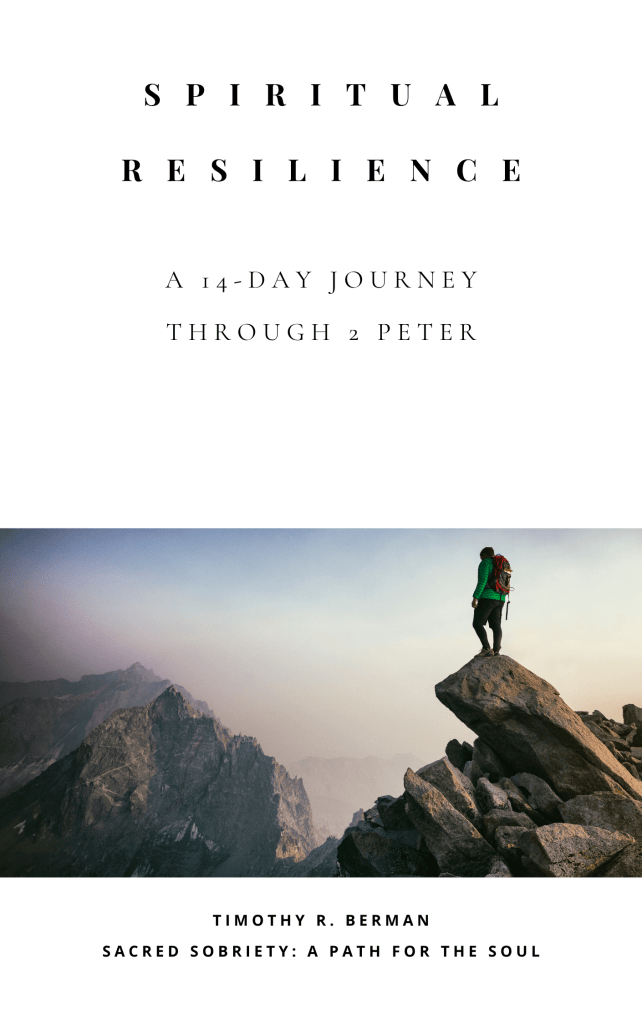
Become a Monthly Partner and receive early access to Spiritual Resilience (14‑Day) and Spiritual Realignment (9‑Week) — including digital devotionals, study guides, workbooks, and signed retail copies once published.
$25/month — Early Access Partner Digital 14‑Day devotional + workbook Signed retail devotional (ships Dec 2026)
$40/month — Premium Partner Digital 14‑Day devotional + workbook Digital signed bundle + bonus teaching video Signed retail devotional (ships Dec 2026)
$55/month — Realignment Partner All digital devotionals + study guides + workbooks Signed retail copies of all Realignment books (ships Dec 2026–Jan 2027)
$65/month — Full Partner Bundle All devotionals + all workbooks Digital signed editions Partner livestream + end‑of‑year gift Signed retail copies of all books (ships Dec 2026–Jan 2027)


No comments:
Post a Comment