Monday, June 22, 2026

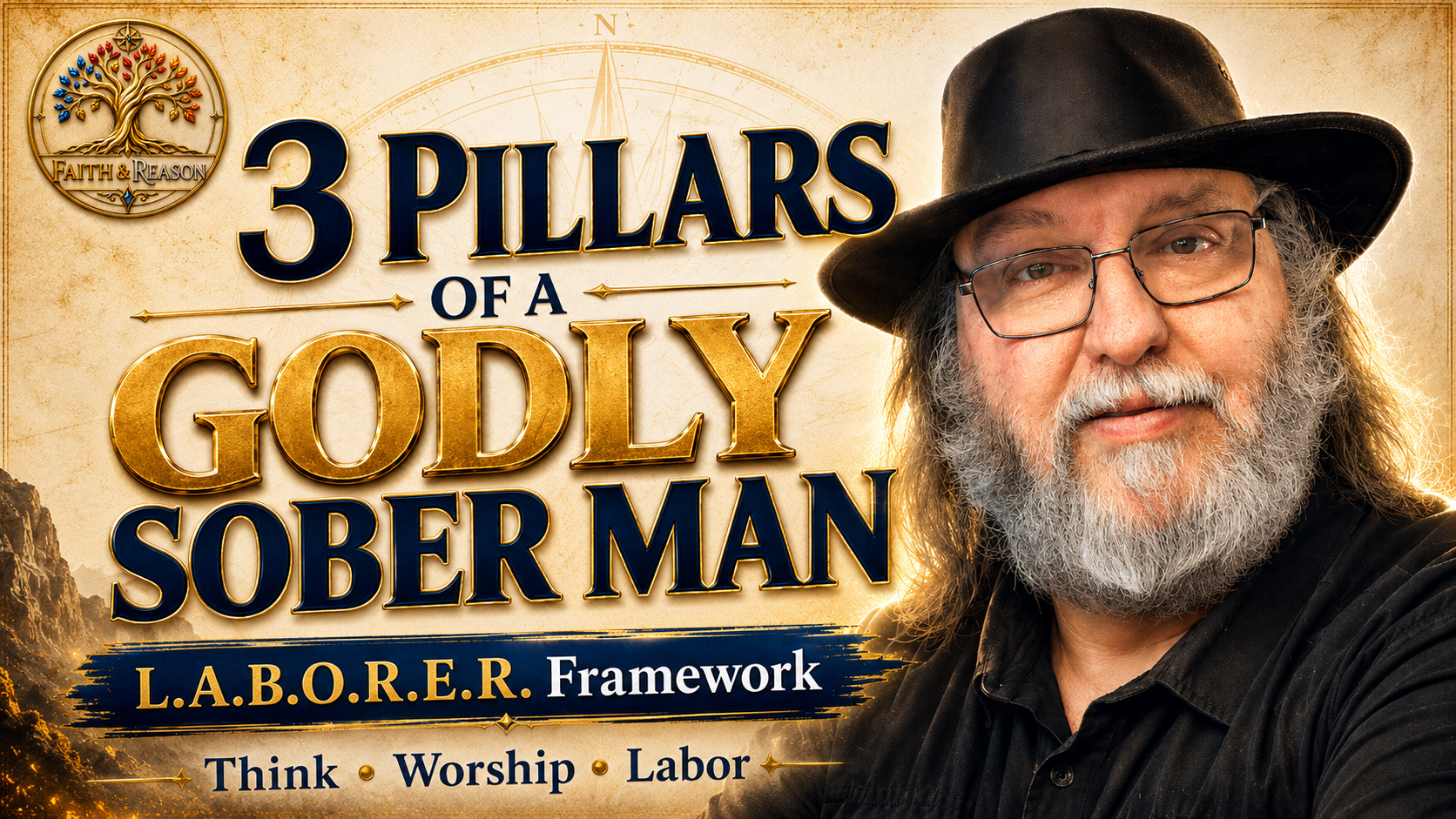
3 Pillars of a Godly Sober Man | The Making of a Man

3 Pillars of a Godly Sober Man | The Making of a Man

Set the Sail for Recovery | The Making of a Man: Think, Worship, and Work

Listen, sobriety does not automatically make a man godly. A man may stop drinking, using, or acting out and still remain mentally undisciplined, spiritually disconnected, emotionally immature, and unwilling to take responsibility for his life. Abstinence may remove the substance, but it does not automatically restore the soul. Sobriety may clear the fog, but only God can reshape the man. That is why A. W. Tozer’s words in “The Making of a Man” strike with such force: humanity was created to think, to worship, and to work.

Abstinence matters, and separating ourselves from destructive substances and behaviors is often the necessary beginning of recovery. Yet recovery must eventually become about more than what we have stopped doing; it must also include who we are becoming. What kind of man am I becoming? What does godliness look like in everyday life? What does it mean to become a man after God’s own heart? This is not about bravado, domination, emotional detachment, or religious performance. It is about becoming the kind of man Christ shapes—one whose mind is renewed, whose heart is awakened, and whose hands are committed to faithful and meaningful labor.

Anchor Verse:2 Thessalonians 3:10 - For even when we were with you, we gave you this command: anyone unwilling to work should not eat.

Paul’s words are direct, but they are not aimed at those who are weak, struggling, sick, or legitimately unable to work. He is confronting deliberate idleness, avoidance, and an unwillingness to take responsibility or participate in the life of the community. Those of us in recovery understand this tension. Some want sobriety without transformation, freedom without discipline, or healing without surrender. Genuine compassion does not enable the patterns that keep us trapped; it encourages responsibility, accountability, spiritual maturity, and faithful participation in life.

This is where Tozer’s framework becomes especially meaningful. To think is to develop a disciplined and truth-seeking mind submitted to Christ. To worship is to live in conscious communion with God and allow His Spirit to awaken the deepest parts of our being. To work is to engage our gifts, relationships, responsibilities, and calling with integrity and perseverance. These three pillars—thinking, worshiping, and working—provide the foundation for moving beyond abstinence into spiritual wholeness and Christlike maturity. As we enter this devotional message, we will explore how God uses each of them to shape sober men—and every person walking the recovery journey—into people of purpose, integrity, and spiritual strength.

Tuesday, June 16, 2026

Dedicated to God: Who Really Has Your Heart in Recovery?

Dedicated to God: Who Really Has Your Heart in Recovery?

It really comes down to one important question for every one of us: Who do we truly serve? This is not merely a theological question reserved for pastors, scholars, or Sunday morning discussion. It reaches directly into the hidden motivations of the heart and exposes what governs our decisions, consumes our attention, and receives the greatest portion of our emotional energy. For many of us who have struggled with addiction, codependency, fear, shame, guilt, resentment, or doubt, the honest answer is uncomfortable. We may have spent years organizing our lives around an addiction, compulsive behavior, unhealthy relationship, secret fear, or desperate need for approval.

There is a simple word that helps us confront this reality: dedication. It is a familiar word, but familiarity has stripped it of much of its sacred weight. We speak of dedicated employees, dedicated parents, dedicated athletes, dedicated volunteers, and dedicated recovery advocates. These uses are not necessarily wrong, but they can cause us to forget that dedication once carried the meaning of consecration—something or someone being set apart for God’s possession, service, worship, and glory.

A. W. Tozer recognized this spiritual loss when he wrote, “It is one of the ironies of modern life that after a word has been dropped from the Christian vocabulary because it no longer expresses any vital content in current church religion, it is often taken up by the world and made to mean not the same thing but something close to what it once meant in its original Christian usage.” Tozer was concerned that Christians had not merely lost a religious word. We had lost the sacred idea the word once represented. Dedication had become synonymous with enthusiasm, discipline, productivity, or commitment, while its deeper meaning of complete surrender to God had quietly disappeared.

This raises a more specific question: To whom—or to what—are we dedicated? One person may answer, “I am dedicated to my job.” Another may say, “I am dedicated to my family.” Someone else may be deeply committed to a church, ministry, fellowship, political cause, or community organization. Those of us in recovery may confidently declare, “I am dedicated to my recovery and sobriety.” Employment, family, fellowship, service, and recovery are all worthy responsibilities. Yet none of them can safely occupy the place that belongs to God alone.

Anchor Scripture: “No one can serve two masters, for a slave will either hate the one and love the other or be devoted to the one and despise the other. You cannot serve God and wealth.” —Matthew 6:24, NRSVUE

Jesus does not present divided loyalty as a difficult arrangement that requires better time management. He presents it as an impossibility. We may attempt to satisfy two masters, maintain two identities, or divide our allegiance between God and a ruling desire, but eventually one will receive our obedience while the other receives our excuses. The controlling master may be money, alcohol, drugs, sexual compulsion, resentment, approval, a relationship, religious performance, professional success, or the need to control every outcome. Whatever we cannot surrender has already begun competing with God for the throne of our hearts.

Saturday, June 13, 2026

Welcome to the Revived Sacred Sobriety

Welcome to the Revived Sacred Sobriety

A New Beginning for A Path for the Soul

Welcome, fellow travelers.

Sacred Sobriety: A Path for the Soul is being renewed, rebuilt, and prepared to become the primary home for my recovery-focused devotionals, spiritual reflections, and resources for living a disciplined, sober, and crucified Christian life.

This relaunch is more than a change of website. It is a return to the original purpose of Sacred Sobriety: creating a dedicated space for those seeking spiritual recovery, emotional sobriety, renewed identity, and a deeper walk with Jesus Christ.

Returning Sacred Sobriety to Its Own Home

Sacred Sobriety and Faith & Reason originally existed as separate platforms with distinct purposes.

Faith & Reason developed as a space for theology, apologetics, biblical discussion, and thoughtful engagement with matters of doctrine and belief. Sacred Sobriety was created to focus more directly on recovery, discipleship, emotional healing, spiritual formation, and the daily work of surrendering our lives to Christ.

Because of financial circumstances, I eventually had to bring both projects together under one platform. While that arrangement allowed the work to continue, it also meant that two different missions were sharing the same space.

I am now grateful to be in a position where Sacred Sobriety can once again stand on its own.

This website will become the dedicated home for content related to recovery, spiritual realignment, Christian discipleship, emotional sobriety, and the crucified life.

Sunday, June 7, 2026

Set the Sail for Recovery & Sobriety — The Urge to Share

Set the Sail for Recovery & Sobriety — The Urge to Share

In my own life, I’ve learned that the most powerful ministry moments are never scripted—they are Spirit‑led. They happen when we are sensitive to the still small voice, when our hearts are open, and when we allow God to interrupt our day for the sake of someone else’s pain.

Years ago, I was at a local church, carrying more than I could handle. A phone call from my father had shaken me, and a careless comment from someone nearby only deepened the wound. I stepped outside, sat on the front steps, and honestly—I wasn’t praying. I was stewing. Hurting. Lost in the swirl of emotion.

Then a young man walked up, sat beside me, and wrapped his arm around my shoulder. “I was driving by,” he said quietly, “and the Holy Spirit told me to turn around. Anything I can pray for?” He didn’t preach. He didn’t correct. He didn’t offer advice. He simply sat with me and prayed.

That moment has stayed with me for years because it revealed something essential about the heart of Christ: To share the light of Jesus is to sit with people in their mess without judgment. This is not merely an act of companionship but a profound demonstration of love and solidarity. It challenges us to look beyond our own struggles and step into the vulnerability of another, reflecting the grace we have received in our own times of need.

This is the heart of today’s message. In an age where everyone seems to be vying for attention, it can be exceedingly rare to find someone who is willing to pause, listen, and simply be present. Yet, it is in these unassuming moments that we often see the clearest reflection of Christ's love. When we allow ourselves to connect with another’s sorrow, we become vessels of hope.

Anchor verse: Romans 10:10“For with the heart man believeth unto righteousness; and with the mouth confession is made unto salvation.” This verse serves as a reminder that our faith is rooted in a heart-to-heart connection with God, which in turn shapes how we connect with others. The Lord looks upon the heart of a person (1 Samuel 16:7) because it is within the heart where we struggle with identity and purpose, grappling with understanding how God loves those who are so broken and distraught. To have the heart of the Father (Psalm 103:13) means we have a deep and compassionate concern for those suffering.

Our ministry efforts, our outreach, and our words should mirror this heart of compassion. How we minister—how we share—and the urge and desire to comfort those in distress are accomplished through the ministering of the Holy Spirit. It is through the Holy Spirit that we find the strength to empathize, listen, and provide solace. This is how we build up the Kingdom of God, by fulfilling the call to truly mourn with those who mourn and walk alongside them, carrying their burden as Christ carried our burdens (Galatians 6:2).

Today, we are going to look at the Urge to share the message of hope and how we minister as the light of Christ and the Glory of the Father. We are set upon the hill, shining as a beacon for all who are struggling in their own despair. More than just an act of faith, sharing our hope involves actively engaging with those around us, bringing the light of Christ to their darkness. We must be vigilant and willing to heed the call when the Holy Spirit nudges us, reminding us that even the smallest actions can lead to significant transformations in the lives of others. Let us embrace our roles as conduits of God’s love, ensuring that the light we shine is a reflection of His unconditional love and grace.

Thursday, June 4, 2026

Molded by God: Identity, Healing, and the Beauty of Being Fearfully and Wonderfully Made (Psalm 139:14)

Molded by God: Identity, Healing, and the Beauty of Being Fearfully and Wonderfully Made (Psalm 139:14)

I always had this inclination that something was wrong. And whenever that feeling rose up, I was convinced it was because of someone else. Someone failing me. Someone not stepping up. Someone not doing the honorable thing. I lived with this constant sense that other people were the reason I suffered. And underneath all of that? A deep ache that no one truly cared, no one appreciated me, no one saw the effort I poured out trying to prove myself.

I chased validation like oxygen. I wanted approval so badly that I shaped myself around what I thought others wanted. I tried to be the “better person” in the eyes of everyone else, all while never actually seeing who I was. I was blind to my own entitlement, blind to my victimhood, blind to the way I was both the victim and the villain in someone else’s story. Hypervigilant. Defensive. Exhausted. And yes—hurt by real betrayals, real lies, real wounds that left me carrying depression, resentment, bitterness, and anxiety like a backpack full of bricks.

And then came the moment that broke me open.

My father had just been released from the hospital after months in intensive care from a brutal auto accident. I had given up everything to be there. And yet, I found myself standing on a cold Seattle curb in January of 2005 with nothing but a backpack, work boots, and three cartons of cigarettes. No home. No money. No plan. No one.

I walked the streets of Seattle wondering if this was the end of me.

But God had other plans.

A transitional housing program took me in. I rested. I worked. I rebuilt. And slowly—slowly—I found my way back to faith. But even then, I still couldn’t see myself clearly. I still felt unworthy. I still lived for validation. I still believed I had to earn dignity, earn love, earn respect.

It wasn’t until years later that the Holy Spirit began breaking the spiritual blindness I had carried for so long. And the revelation was simple, but it shook me to my core:

I didn’t know who I was. And I didn’t know how my Heavenly Father saw me.

Anchor Verse — Psalm 139:14 (NASB2020): I will give thanks to You, for I am fearfully and wonderfully made; Wonderful are Your works, And my soul knows it very well.

Two words rise like mountains in this verse: fearfully and wonderfully. Fearfully — yārē’ — to stand in awe, reverence, astonishment. Wonderfully — pālā’ — marvelous, extraordinary, beyond human ability.

This is not casual language. This is identity language. God is not saying, “You’re barely acceptable.” He is saying, “You are My intentional, awe-inspiring work.” We are His workmanship, created in Christ Jesus for good works that He prepared beforehand (Ephesians 2:10). Even when we feel like a mistake, God calls us purposeful, crafted, and known (Psalm 139:1–4).

So today, let’s walk slowly through what it means to be fearfully and wonderfully made—especially when we don’t feel like it. Especially when addiction, shame, trauma, or codependency have distorted the mirror we look into. Especially when our past tells us one story, but God is trying to tell us another.

Wednesday, June 3, 2026

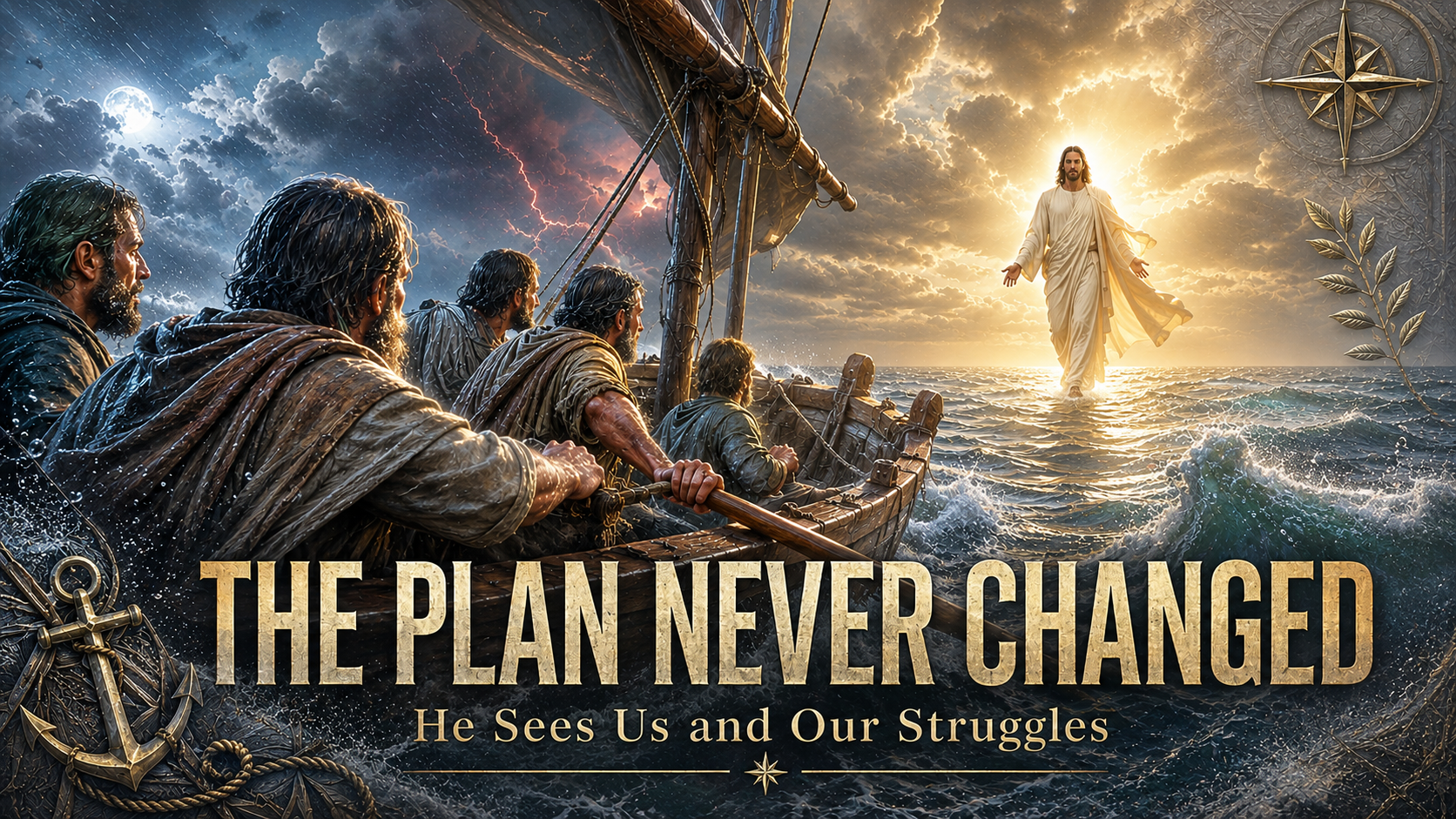
The Plan Never Changed - He Sees Us and Our Struggles

The Plan Never Changed - He Sees Us and Our Struggles

There was a moment in my youth where I learned a lesson I didn’t understand until much later. It happened during a Boy Scout outing one summer. We were out on the bay near my hometown, and it was the first time I ever learned how to paddle a canoe.

Okay, so what — you got to go out on the water, learn to paddle, in a canoe. What’s the big deal?

Here’s the lesson.

On the way back to shore, the tide was going out. We were paddling against it. Not upstream on a river — against the tide of the bay. And the harder we paddled, the slower we moved. Every inch forward took every ounce of strength we had.

Life feels like that sometimes. Recovery feels like that often. You’re straining at the oars, wondering if you’re even moving, wondering when you’ll reach the destination, wondering when the struggle will ease.

I didn’t think about that moment again until I came across a reel of a guy with a sideways cap, tattoos, and piercings teaching on Mark 6 — the same chapter where Jesus feeds the 5,000, right after He receives word of John the Baptist’s death, and right after He commissions the Twelve to preach the Gospel.

Anchor Verse — Mark 6:47–48 (NRSVUE): “When evening came, the boat was out on the sea, and he was alone on the land. When he saw that they were straining at the oars against an adverse wind, he came toward them early in the morning, walking on the sea. He intended to pass them by.”

And that’s where everything shifted. Pastor Kelly K said something that stopped me cold: If Jesus saw them, He sees you too.” The disciples were in serious trouble — rowing hard, struggling against the wind and waves. And Jesus saw them long before He ever stepped onto the water. Just like He sees you. Then came the line that most of us have never paid attention to: “He intended to go past them.” Why would Jesus walk toward them… but not stop?

This Crucified Life: What I No Longer Miss

This Crucified Life: What I No Longer Miss

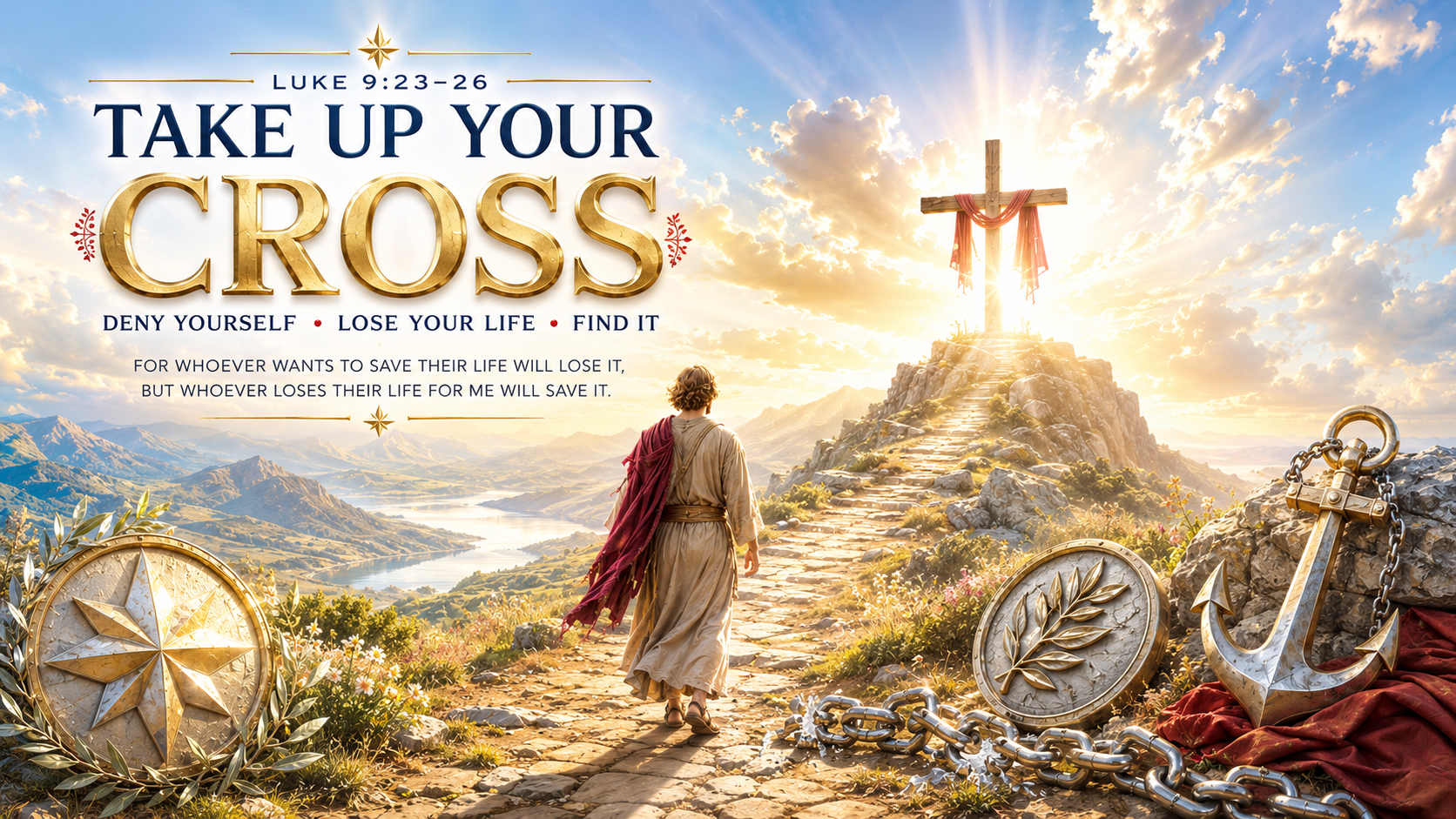
What is the purpose of this message today? Why focus on what I no longer miss? Because today's message is about what dies and what rises within each one of us. Luke 9 is the clearest, the sharpest, and the most recovery aligned call Jesus ever gives. It is a call to deny self. A call for us to take up our cross daily. A call to follow after Him. And it is one where we are asked to count the cost because it requires that we lose our life in order to save it. It is where we come to the end of ourselves, attempting to gain the appeasement of those around us, to gain what the world may offer us, yet lose our very soul in the process. It speaks directly to the "things I no longer miss" in my own addiction, codependency, chasing the girlies, and pretending to be someone I never was.

Welcome back, fellow travelers. If you haven’t watched the recent devotional in our Set of the Sail series— “The Lord Giveth Knowledge: The Spiritual Awakening of Christian Recovery”—I encourage you to do that. In that message, we talked about walking the crucified life… not coping, not managing, not surviving… but dying to self so that Christ may live fully in us. Having a real genuine spiritual awakening to the things of God.

Today, we’re going deeper. Because if we’re honest, many of us have spent years trying to “manage” life on life’s terms. But Sacred Sobriety is not about management. It’s about transformation. It’s about stepping boldly into the victory Christ already secured.

You and I have twenty‑four hours today. And I want to take a few of those minutes to speak directly to the wounds, addictions, anxieties, fears, and faith crises that have shaped us.

Because there are things I no longer miss. And I want to show you why.

Anchor Verse — Luke 9:23–26: “If any want to become my followers, let them deny themselves and take up their cross daily and follow me. For those who want to save their life will lose it, and those who lose their life for my sake will save it.

This is the heartbeat of recovery. This is the heartbeat of discipleship. This is the heartbeat of Sacred Sobriety.

Jesus is not calling us to cope. He is calling us to die— to ego, to self‑will, to the old patterns, to the old wounds, to the old survival strategies. And in that death… He calls us to live. To live a blessed and abundant life. To live with peace of mind and joy in our hearts. Yet to do this - he invites us in because we are heavy laden, weary travelers and are in much need of rest (Matthew 11:28-29).

Monday, June 1, 2026

From Surviving to Thriving: The Spiritual Awakening Every Christian in Recovery Needs

From Surviving to Thriving: The Spiritual Awakening Every Christian in Recovery Needs

If you’re not familiar with the early story of Alcoholics Anonymous, it’s often said that the ideas behind the Twelve Steps were shaped by the Oxford Group—a gathering of Christian men committed to honesty, confession, restitution, and surrender. Bill Wilson, one of AA’s founders, was deeply influenced by them. But today’s devotional isn’t about the origins of AA. It’s about a man named Rowland Hazard, whose struggle with alcoholism led him to seek help from the famed psychiatrist Carl Jung in the early 1930s.

After extensive treatment, Jung told Hazard something that sounds harsh but is deeply honest: his condition was hopeless from a medical standpoint. His only hope, Jung said, was a spiritual experience—a profound awakening that would transform him from the inside out. That realization eventually shaped the foundation of AA itself. Hazard’s spiritual awakening, experienced through the Oxford Group, was shared with Bill Wilson, and from that encounter the Twelve Steps were born.

Let’s sit with that for a moment. Because in my own journey—through recovery, sobriety, homelessness, fear, doubt, and a faith crisis—I had to face the same truth: everything was utterly hopeless until I had a spiritual awakening. Some call it “hitting bottom.” But I’ve come to see it as the moment the Holy Spirit reveals Christ to us in a way the intellect alone could never reach.

Today, many try to think their way into faith. They know about God but never come to know God Himself. And that brings us to the heart of today’s message: What does it mean to truly know God—and Jesus Christ whom He has sent? (John 17:3)

Our anchor verse is Isaiah 1:18–20, where God invites us to “come and reason together.”

Come now, let us argue it out, says the Lord: if your sins are like scarlet, will they become like snow? If they are red like crimson, will they become like wool? If you are willing and obedient, you shall eat the good of the land, but if you refuse and rebel, you shall be devoured by the sword, for the mouth of the Lord has spoken.

This is not an intellectual debate—it is an invitation to examine our hearts, our wounds, our failures, and our inability to save ourselves. It is a call to return, to be still, and to know that He is God.

Today, we explore what it means to know Christ, to know the Father, and to know who we truly are through a genuine spiritual awakening.

About Me

My photo
Timothy R. Berman is a Christian devoted to living a mindful, crucified life—one shaped by surrender, spiritual attentiveness, and the pursuit of divine wisdom. Passionate about unveiling God‑breathed insights, he writes soul‑stirring devotionals that guide readers into deeper faith, renewed identity, and Christ‑centered transformation. Timothy’s work invites believers to slow down, reflect, and encounter God in ways that strengthen their walk and enrich their relationship with Him.